

















Thermal Vacuum Testing
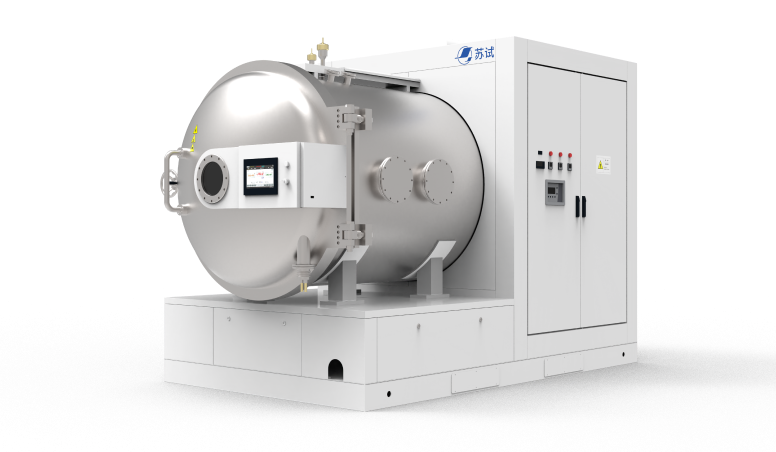
Aerospace products operate in a complex vacuum-thermal environment while in orbit. To ensure that all components on a spacecraft can withstand this environment and function normally throughout their orbital operation, proper thermal design is essential. Thermal testing is also required to verify the thermal design and inspect the thermal performance of components. Thermal vacuum test systems are primarily used for combined testing of satellite-borne products under high vacuum, hot and cold environments, and cold-black background simulations. Through extensive ground-based testing, a process of test-improve-retest is conducted to assess whether the environmental performance indicators of satellite-borne products in various orbital modes meet design requirements, ensuring their normal operation.
The laboratory's thermal vacuum test chambers can provide a vacuum level of 10⁻³ Pa or better. The internal annular heat sink can simulate a cold-black space environment, and the temperature-controlled baseplate can shorten the temperature stabilization time of the test specimen under high vacuum. The temperature measurement system allows for monitoring and data recording during the test. It can be used for space environment testing or reliability testing of materials, components, assemblies, parts, and small complete units in the aerospace field.
Heat Sink: Φ2,600 × 2,800 mm (straight section);
Cold Plate: 1,800 × 2,000 mm;
L-shaped Cold Plate: 1,100 × 1,300 mm;
Load: 50 kg;
Normal pressure to 1.33×10⁻³ Pa ≤ 5h;
Normal pressure to 6.65×10⁻³ Pa ≤ 5h;
Ultimate Vacuum: 5.0×10⁻⁵ Pa;
Chamber Heat Sink Temperature Range: -150 to 150°C;
Specimen Control Temperature Range: -100 to 100°C;
Heat Sink Temperature Uniformity: ±5°C;
Cold Plate Temperature Uniformity: ±5°C;
Heat Sink and Cold Plate Temperature Fluctuation: ≤±2°C;
Heating/Cooling Rate: ≥2°C/min.