



















RF (Radio Frequency) Wireless Communication Testing
(1) Rapid Development of Wireless Communication Technology
Nowadays, wireless communication has been deeply integrated into people’s lives and the production processes of various industries. Evolving from 4G to 5G, and even moving towards the era of 6G under exploration, the Internet of Things (IoT) is booming. Fields such as smart homes, intelligent transportation, and industrial automation rely on wireless RF (Radio Frequency) communication to achieve interconnection of devices and real-time data interaction. With a huge number of devices connecting to networks, communication frequency bands are becoming increasingly crowded, and signal quality is facing severe challenges. To ensure efficient and stable wireless communication, accurate RF testing is crucial. For example, in an urban intelligent transportation system, vehicles communicate with roadside units and traffic control centers via RF. If signals are interfered with or experience excessive delays, it can easily lead to traffic congestion or even accidents. In industrial workshops, abnormal wireless communication of automated equipment can cause production lines to stall and products to be scrapped.
(2) Regulatory Policies and Market Access Requirements
To regulate the wireless communication market, countries and regions worldwide have introduced strict regulations one after another. Certifications like the EU’s CE certification and the US FCC certification all include RF testing requirements, mandating that electronic products meet standards in terms of RF performance, electromagnetic compatibility, etc. Otherwise, they are prohibited from being sold on the market. As consumers’ expectations for the communication quality of electronic products (such as the clarity of mobile phone calls and the stability of Wi-Fi speeds) rise, enterprises, to seize the market, proactively seek professional RF testing to optimize product performance, meet market demands, and enhance brand competitiveness.
(1) Mobile Terminal Devices
Including smartphones, tablets, smartwatches, CPEs, MIFIs, routers, etc.
(2) Consumer Electronics Products
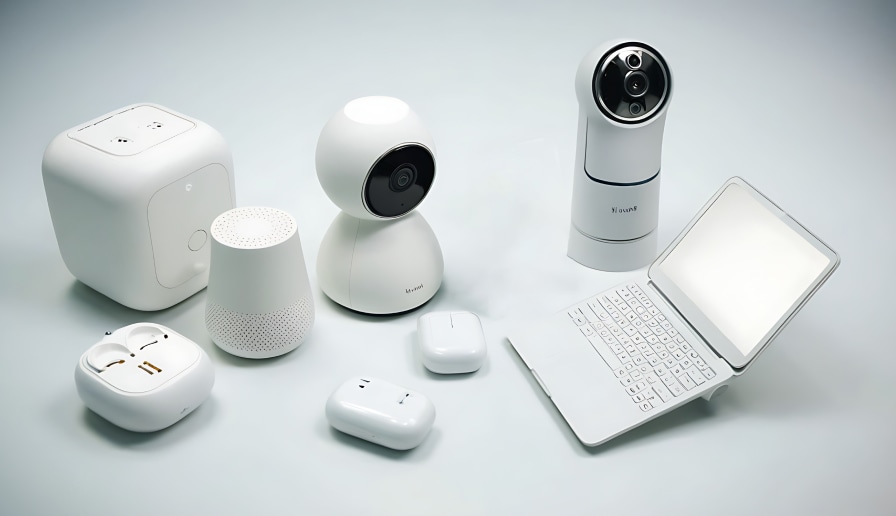
Including Bluetooth speakers, laptops, smart bracelets, wireless doorbells, etc.
(3) Wireless Communication Modules
Including Wi-Fi modules, Bluetooth modules, ZigBee modules, NB-IoT modules, etc.
(4) Internet of Things (IoT) Devices
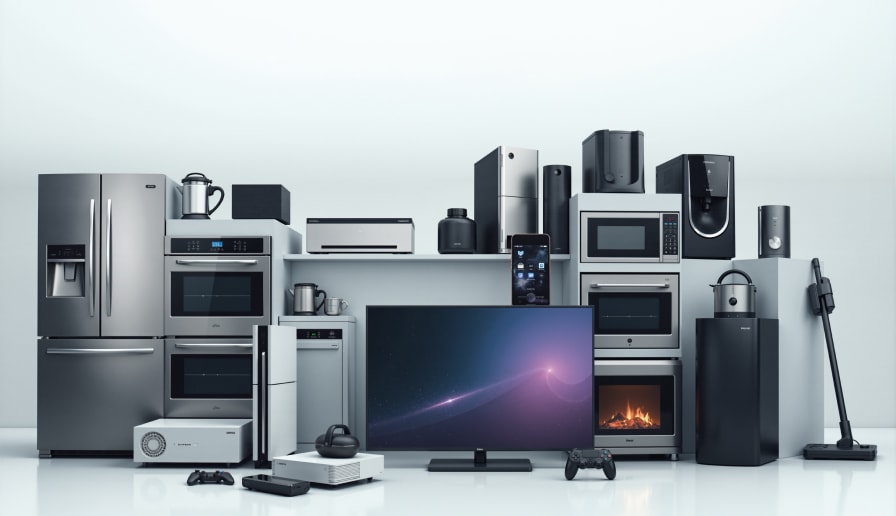
Such as smart home appliances, industrial sensors, environmental monitoring devices, smart logistics labels, etc.
(5) Radio and Television Equipment
Including digital TV receivers, set-top boxes, wireless broadcast transmitters, etc.
(6) Automotive Electronic Systems
Including in-vehicle navigation systems, in-vehicle entertainment systems, vehicle networking modules, tire pressure monitoring systems, car remote keys, etc.
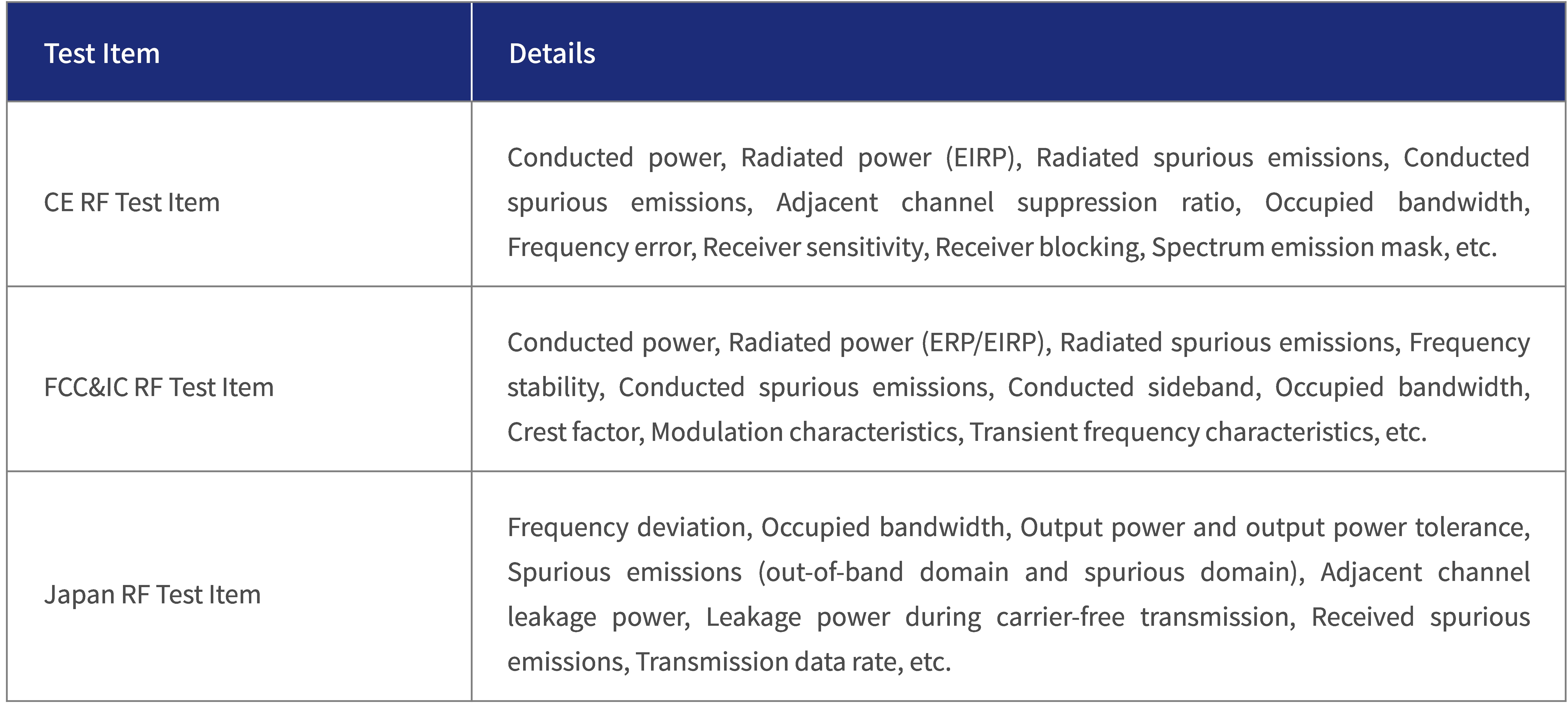
CE Testing Standards:
ETSI EN 300 328; ETSI EN 301 893;
ETSI EN 300 220-1; ETSI EN 300 220-2;
ETSI EN 300 220; ETSI EN 300 330;
ETSI EN 300 440; ETSI EN 302 502;
ETSI EN 303 413; ETSI EN 303 417;
ETSI EN 303 345-1; ETSI EN 303 345-2;
ETSI EN 303 345-3; ETSI EN 302 571;
ETSI EN 303 687;
ETSI EN 302 065-1; ETSI EN 302 065-2;
ETSI EN 302 065-3; ETSI EN 302 065-4;
ETSI EN 302 065-5
ETSI EN 300 220-3-1; ETSI EN 300 220-3-2
ETSI EN 300 220-4; ETSI EN 300 422-1(无线麦克风)
ETSI EN 300 422-2; ETSI EN 300 422-3;
ETSI EN 300 422-4;
ETSI EN 301 357(FM Transmitter) ;
ETSI TS 151 010-1; ETSI TS 151 010-2;
ETSI TS 134 121-1; ETSI TS 134 121-2;
ETSI TS 136 521-1; ETSI TS 136 521-2;
ETSI TS 136 521-3;
ETSI TS 138 101-1; ETSI TS 138 101-3;
ETSI TS 138 521-1; ETSI TS 138 521-3;
ETSI TS 138 521-4; ETSI TS 138 533;
ETSI TS 134 108; ETSI TS 136 508;
ETSI TS 138 508-1; ETSI TS 138 508-2;
ETSI TS 138 522;
ETSI TS 102 230-1;
ETSI EN 301 511; ETSI EN 301 908-2;
ETSI EN 301 908-1; ETSI EN 301 908-13
ETSI EN 301 502(GSM BS); ETSI EN 301 908-14;
ETSI EN 301 908-24;
FCC&IC Testing Item Standards:
CFR 47, FCC Part 15 Subpart C
CFR 47, FCC Part 15 Subpart E
CFR 47, FCC Part 15 Subpart F
CFR 47, FCC Parts 22, 24, 25, 27, 90, 95, 96, 97, 101
WINNF-TS-0122 CBRS CBSD Test Specification;
ONGO-TS-9001 Certification Test Plan
RSS-GEN; RSS-111; RSS-130; RSS-132 RSS-133; RSS-139;
RSS-140; RSS-170; RSS-192; RSS-195; RSS-197; RSS-198;
RSS-199; RSS-210; RSS-216; RSS 220;
RSS-247 (with and without DFS); RSS-248
RSS-123(Licensed Wireless Microphones)
RSS-252(C-V2X)
RSS-310
Japan Testing Standards:
Article 2, Paragraph 1 of the Ordinance:
Item 2(3);
Item 11-3; Item 11-7;
Item 11-19; Item 11-19-2;
Item 11-19-3; Item 11-21; Item 11-30; Item 11-34;
Item 19;
Item 19-2; Item 19-2-2; Item 19-2-3; Item 19-3; Item 19-11;
Item 21; Item 21-3;
Item 22;
Item 54; Item 54-2; Item 54-4; Item 54-6
Item 79;
Item 80;
Ordinance Concerning Terminal Facilities etc. (Ministerial Ordinance of the Ministry of Posts and Telecommunications No.31 of April 1, 1985);
Article 3-9;
Article 17-32;
Article 34
CNAS (China National Accreditation Service for Conformity Assessment)
A2LA (American Association for Laboratory Accreditation)
Nationwide