


















SAR (Specific Absorption Rate) Testing

(1) Concerns over Health Impacts of Electromagnetic Radiation Garner Attention
In an era of widespread use of electronic and electrical equipment, people’s daily lives are surrounded by various electronic products, such as smartphones, tablets, and wireless routers. These devices emit electromagnetic radiation of different frequencies during operation. Consumers are increasingly worried that long-term exposure to electromagnetic radiation may pose potential hazards to their health, especially to sensitive parts like the brain, reproductive system, and eyes. For example, it may cause insomnia, headaches, affect fertility, and accelerate eye fatigue. Although medical research has not yet reached a definitive conclusion, some cases suggest an association between high-intensity and long-duration electromagnetic radiation and health abnormalities. To alleviate consumer concerns and fulfill social responsibilities, enterprises urgently need professional SAR (Specific Absorption Rate) testing to ensure that the electromagnetic radiation of their products is within a safe range.
(2) Regulatory Mandates to Safeguard Public Safety
Governments and international organizations around the world, out of consideration for public health, have enacted laws to strictly control the electromagnetic radiation levels of electronic and electrical products, with SAR as a key measurement indicator. Certifications such as the EU’s CE certification and the US FCC certification mandatorily require that products undergo and pass SAR testing before being launched on the market. Departments like China’s Ministry of Industry and Information Technology also require specific electronic products to meet SAR limits. Products that fail to meet the standards are prohibited from being sold or imported. The aim is to protect the public from unreasonable electromagnetic radiation and maintain a healthy market order, prompting enterprises to proactively seek compliant SAR testing services.
Wireless Communication Products:
Including smartphones, tablets, smartwatches, blood pressure monitors, oximeters, and other products that operate at a distance of less than 20 cm from the human body.
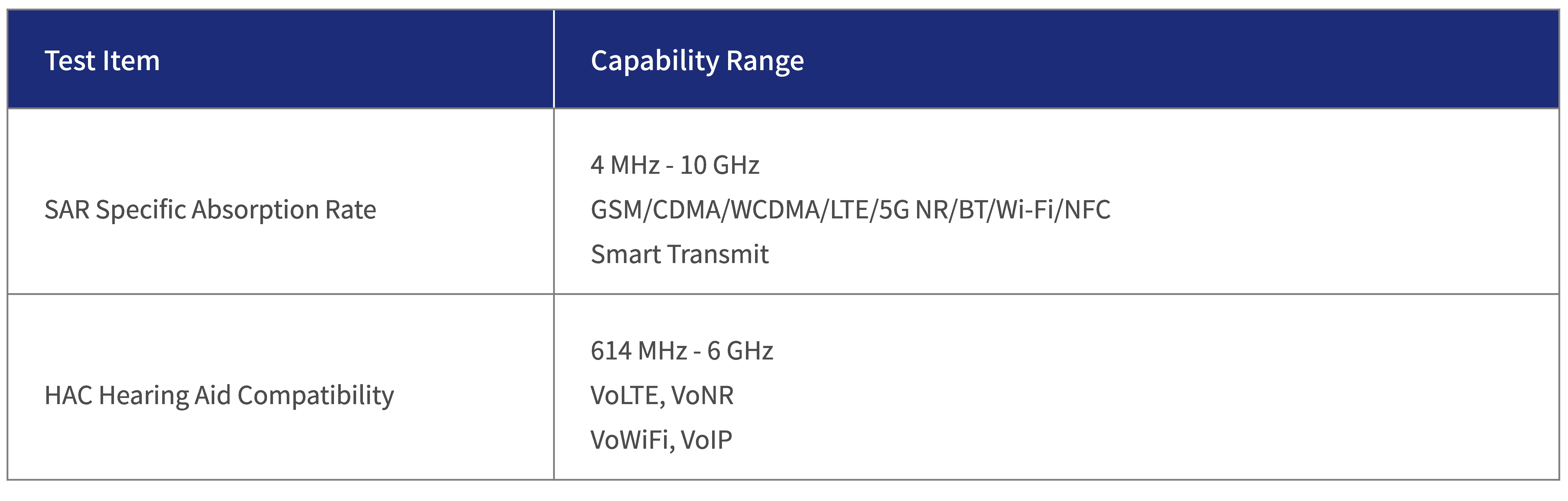
EN 62209-1; BS EN 62209-1; IEC 62209-1
EN 62209-2; BS EN 62209-2; IEC 62209-2
IEC 62209-3; EN IEC 62209-3; BS EN IEC 62209-3
EN 62311; BS EN 62311; IEC 62311; EN IEC 62311
BS EN IEC 62311
EN 62479; BS EN 62479; IEC 62479
EN 50360; BS EN 50360
EN 50566; BS EN 50566
EN 50385; BS EN 50385
EN 50383
EN 62232; IEC 62232; BS EN 62232
EN 50364; BS EN 50364
EN 50663; BS EN 50663
EN 50665; BS EN 50665
EN 50384; BS EN 50384
IEEE Std. 1528
IEC/IEEE 62209-1528
EN IEC/IEEE 62209-1528
BS EN IEC/IEEE 62209-1528; ANSI/IEEE Std. C95.1
Safety Code 6
RSS-102
RSS-102.SAR.MEAS
RSS-102.IPD.MEAS
RSS-102.IPD.SIM
RPS S-1
RPS S-1 Advisory Note
KDB 865664 D01
KDB 941225 D01
KDB 941225 D05
KDB 941225 D06
KDB 941225 D07
KDB 616217 D04
KDB 643646 D01
KDB 447498 D01
KDB 447498 D02
Australian Communications Authority “Radiocommunications (Electromagnetic Radiation – Human Exposure) Standard”
AS/NZS 2772.2
Article 14-2 of the Ordinance Regulating Radio Equipment
Annex 79 of MIC Notification No.88
CNAS (China National Accreditation Service for Conformity Assessment)
A2LA (American Association for Laboratory Accreditation)
Nationwide