


















Shock Response Spectrum (SRS) Testing
In shock response spectrum testing, shocks that a spacecraft may encounter during different flight phases are simulated, such as launch vibrations, acoustic shocks during ascent, and re-entry shocks during return. By applying shock pulses of different types and intensities, the resistance and adaptability of aerospace products to shocks can be tested and evaluated. This testing involves not only the overall structure of the spacecraft but also various key parts and components, such as electronic equipment, propulsion systems, and thermal control systems. Through SRS testing, design problems can be identified and corrected in a timely manner, improving the reliability and safety of aerospace products and providing an important guarantee for the success of space missions.

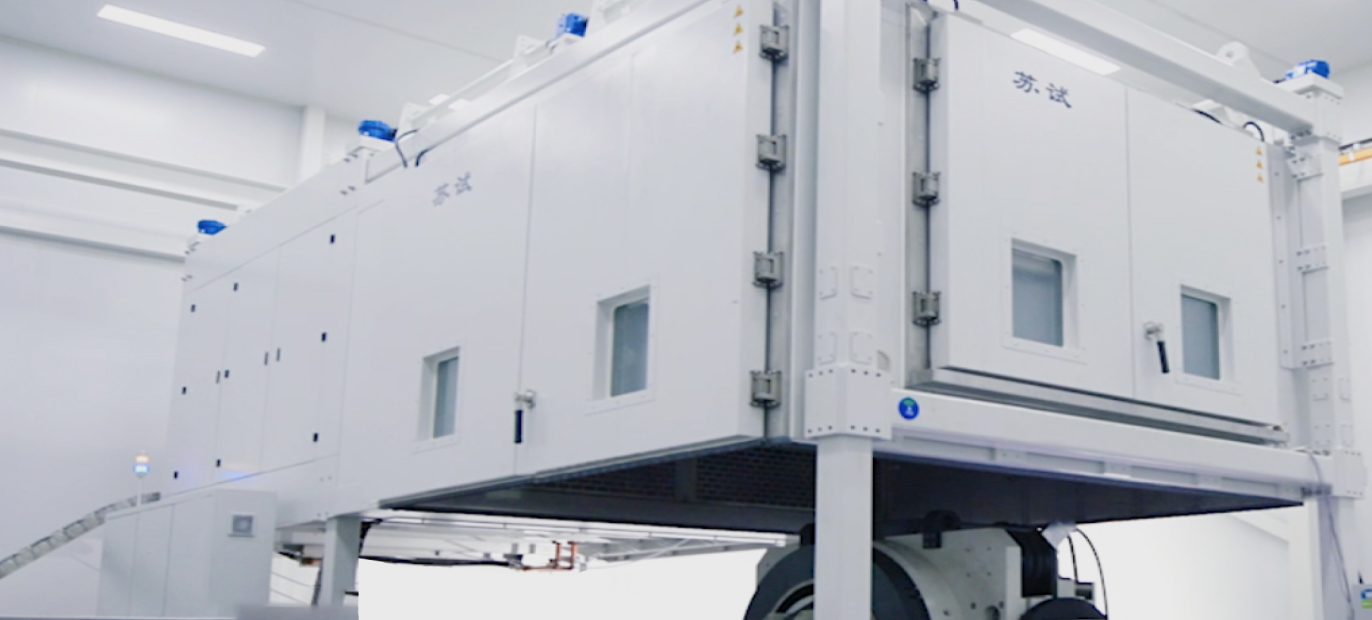
The pneumatic shock response spectrum test rig uses a pneumatic cylinder hammer to apply horizontal shocks. Compared to traditional pendulum-type shock tables, it can excite higher SRS peaks, thus meeting more stringent test requirements. Additionally, this test rig has overcome the technical challenge of rapid reset for large-sized tables under heavy loads, achieving an integrated technology for limiting, resetting, and damping effects, which greatly enhances the safety and efficiency of high-level shock test systems.
Shock Response Spectrum Test System Equipment Parameters:
1) Max. Load: 100 kg;
2) Table Size: 1,000 mm × 800 mm;
3) Max. Response Acceleration: 50,000 m/s²;
4) Response Frequency Range: 10 Hz to 5,000 Hz;
5) SRS Rise Slope: (6-9) dB/oct.