




















Morphology Testing
The main content of morphology analysis is to analyze the geometric morphology of the material, the particle size and its distribution, and the composition and phase structure of the micro-area of the morphology. The main methods of morphology analysis are: Optical Microscopy (OM), Scanning Electron Microscopy (SEM), Transmission Electron Microscopy (TEM), Scanning Tunneling Microscopy (STM), and Atomic Force Microscopy (AFM).
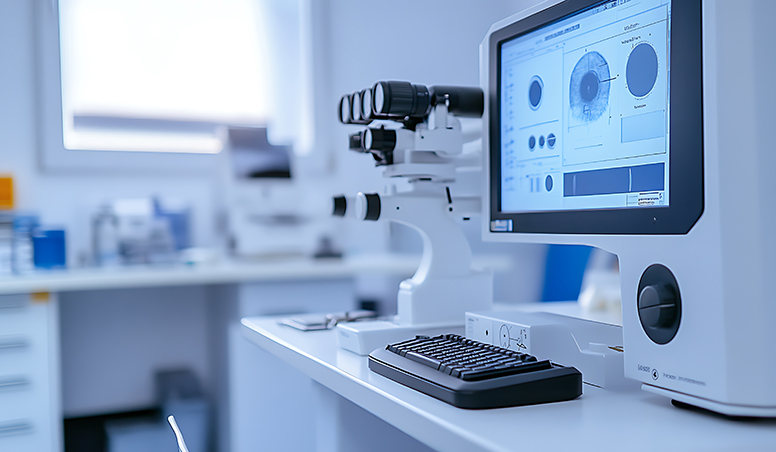
Low-magnification structure, microstructure, grain size, electrical conductivity, grain structure, intergranular corrosion, stress corrosion, exfoliation corrosion, fractography, corrosion morphology, corrosion product analysis, etc.
The laboratory is equipped with instruments such as metallographic microscopes, electron probes, X-ray diffractometers, scanning electron microscopes, energy dispersive spectrometers, and stereomicroscopes, which can meet the testing needs of surface morphology and micro-morphology, and has capabilities for fractography, coating structure, lattice defect, and failure analysis.
Metallographic Microscope: Measurement range 25X to 1,000X;
Electron Probe: Qualitative and quantitative analysis, point/line/area distribution scanning, phase analysis of immersed materials, composition analysis, and identification of inclusion morphology and composition, etc.;
X-ray Diffractometer: Residual stress testing and analysis, grain orientation analysis, structure/phase analysis, small-angle scattering and nanoparticle size analysis, etc.;
Scanning Electron Microscope: Conducts secondary electron imaging, backscattered electron imaging, and image processing of the surface morphology of various solid samples. Can achieve micro-morphology observation and micro-area energy spectrum composition analysis, as well as line and area distribution analysis of solid samples.
ASTM E1078, ASTM E1504, ASTM E1829, etc.