





















Products & Services
Material Composition Analysis
Material composition analysis refers to the analysis of known or unknown components of a material. By quickly determining the constituent components in a target sample, information such as the material's type, raw materials, additives, specific components and their content, and foreign matter can be identified. According to the conclusion, composition analysis can be divided into qualitative analysis and quantitative analysis. Qualitative analysis mainly determines the types of components in a substance, while quantitative analysis is performed after qualitative analysis to obtain the distribution ratio of various components.
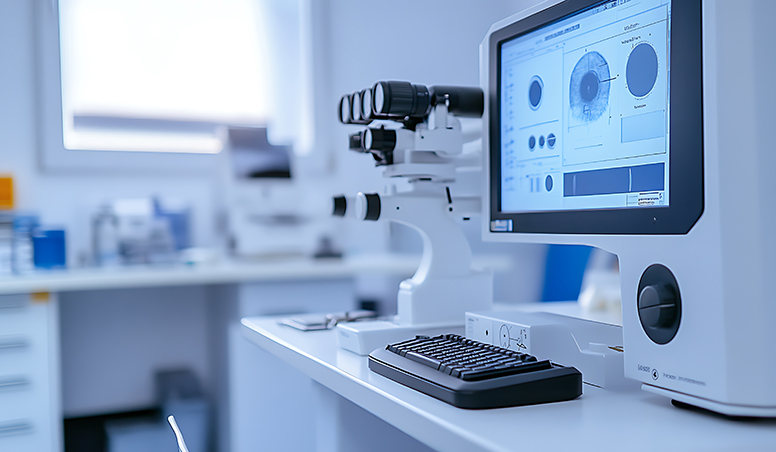
Main equipment includes oxygen-nitrogen-hydrogen analyzer, carbon-sulfur analyzer, atomic absorption spectrometer, spark direct-reading spectrometer, X-ray fluorescence spectrometer, metallographic microscope, scanning electron microscope, differential thermal analyzer, high-performance liquid chromatograph, gas chromatograph-mass spectrometer, inductively coupled plasma mass spectrometer, UV-Vis spectrophotometer, etc. Auxiliary equipment includes microwave digestion system, solid-phase extraction system, Soxhlet extraction device, automatic polishing and mounting machine, etc., to provide fine operation and analysis, thereby assisting clients in tracking and improving experiments.