






















Thermal Abuse
As a key component for energy conversion and storage, the safety, reliability, and durability of batteries have become a focus of the industry. Especially under extreme conditions such as high temperature, overcharge, and short circuit, batteries may experience thermal runaway, and even cause fires or explosions, posing a serious threat to life and property. Therefore, battery thermal abuse testing, as an important means of evaluating battery safety performance, is of great importance.

External fire, heating test, thermal propagation, thermal runaway, etc.
Equipped with various specifications of charge-discharge equipment, explosion-proof test chambers, and heating equipment, suitable for various tests from cell to battery pack.
1) Fire Exposure Equipment
Meets battery flammability test standards such as UL2054, GB31241;
Temperature Acquisition: -100°C to 1,000°C; Voltage Measurement: 0 to 30V.
2) Heating Equipment
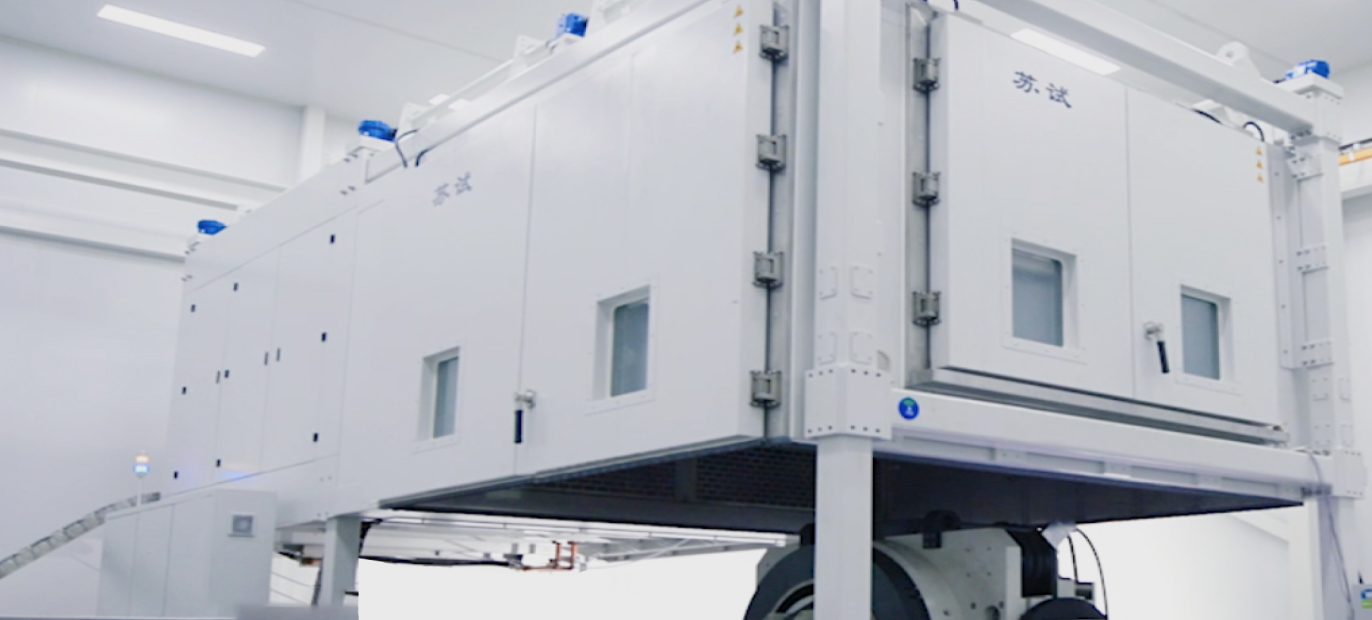
Volume: 806m³, 26m*5m*6.2m (D*W*H), Temperature: -60°C to 80°C;
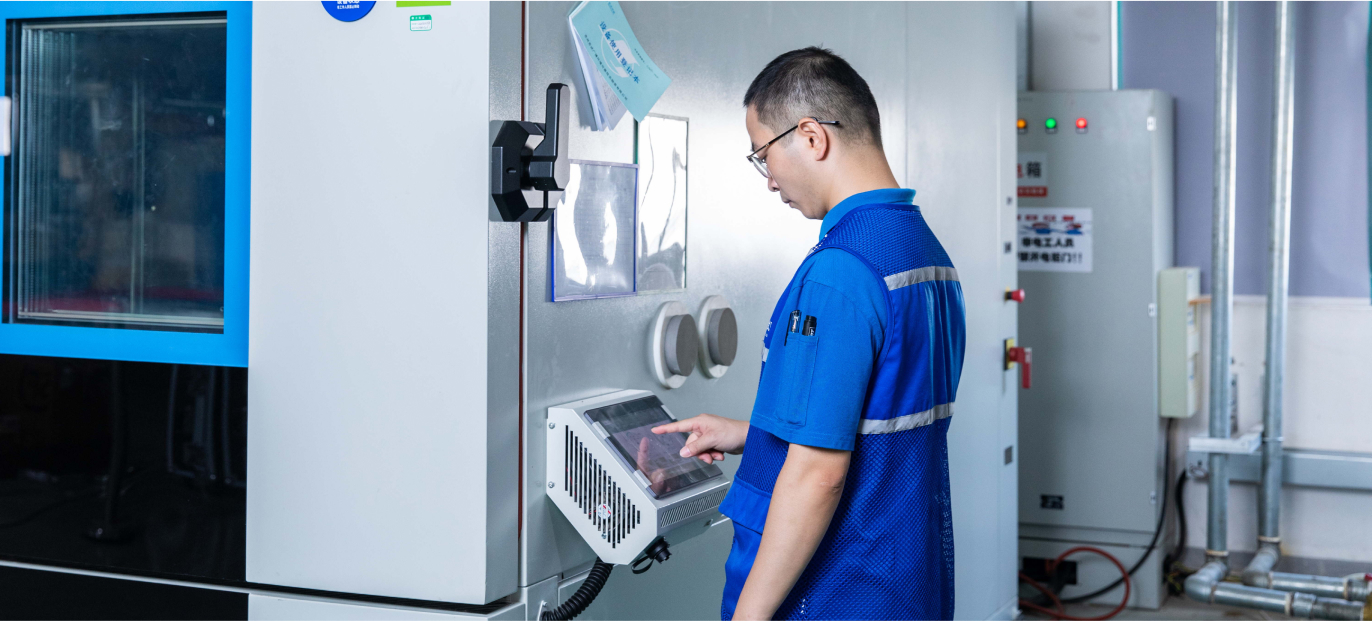
Volume: 24m³, 3.3m*3.3m*2.2m (D*W*H), Temperature: -70°C to 200°C;
Humidity Range: 20%RH to 98%RH;
Voltage: -10V to 1,200V, Charge/Discharge: 0A to 1,800A; Voltage: 0V-60V, Discharge: 0A-3,000A.
3) Thermal Propagation Equipment
Stroke: 300mm;
Lead: 10mm;
Reduction Ratio: 10;
Linear Speed: 10mm/s;
Thrust: 30KN.
4) Thermal Runaway Chamber
Volume: 806m³, 26m*5m*6.2m (D*W*H), Temperature: -60°C to 80°C;
Volume: 24m³, 3m*2m*2.6m (D*W*H), Temperature: -70°C to 200°C;
Humidity Range: 20%RH to 98%RH;
Voltage: -10V to 1,200V, Charge/Discharge: 0A to 1,800A; Voltage: 0V-60V, Discharge: 0A-3,000A.
5) Thermal Runaway Test for Battery Minimum Management Unit
Temperature Acquisition: -100°C to 1,000°C;
Voltage Measurement: 0 to 30V.
ANSI/CAN/UL/ULC 2580, etc.